


1 / 26


 View all images
Villa Perle
4 Bedrooms
4 Bathrooms
Max. 10 guests
210 m²
Vinkuran
View on Map
Please select dates and guests
Description
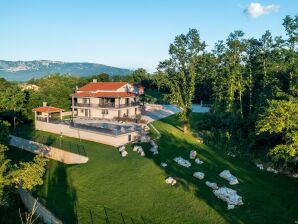
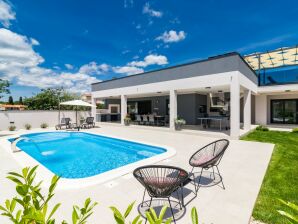
The light-filled Villa Perle is located near Pula and can comfortably accommodate up to 10 people.
The modernly designed villa has 4 bedrooms with attached bathrooms. The modern kitchen is fully equipped and connected to a large...
Amenities
4 Bedrooms (1)
4 Bathrooms
Max. 10 guests
210 m²
Free WIFI
Television
Pets and dogs allowed
Swimming pool
No information about smoking
Dishwasher
Washing machine
Prices
Please select dates and guests
Usage-dependent additional costs
Please note that additional usage-dependent costs may apply. For questions about this, please contact the host directly.
Host's notes
Cancellation policy
Up to 4 weeks before the arrival day, a cancellation is possible free of charge, but the deposit is not refunded.
We recommend the completion of a travel cancellation insurance. In the case of early departure, there is no claim to repay the remaining rent.
Rental conditions
- •Deposit: 30% of the rental price at time of booking
- •Final payment: 4 weeks before arrival
- •Security deposit: €400.00
- •Arrival time: earliest 16:00
- •Departure: by latest 10:00
Payment options
- •Bank transfer
Location
Distances
AIRPORT8 km
BEACH4 km
NIGHT LIFE2 km
RESTAURANT500 m
SHOPS1 km
TOWN CENTER2 km
WATER4 km
Nearby
Our leisure tips
- •Badminton
- •Barbecue
- •Basketball
- •Beachvolleyball
- •Bike rental
- •Bowling
- •Camping
- •Casino
- •Cinema
- •Culture
- •Cycling
- •Dancing
- •Dolphin watching
- •Fishing
- •Football
- •Game barn/ indoor playground
- •Golf
- •Gym
- •Hunting
- •Indoor swimming pool
- •Jet skiing
- •Jogging
- •Kart race
- •Miniature golf
- •Museums
- •Nightlife
- •Paintball
- •Paragliding
- •Pedal boating
- •Playground
- •Sailing
- •Scuba diving
- •Spa
- •Spa facility
- •Squash
- •Summer toboggan run
- •Surfing
- •Swimming
- •Table tennis
- •Tennis
- •Theatre
- •Theme park
- •Tobogganing
- •Volleyball
- •Wakeboarding
- •Water sports
- •Water-tubing
- •Waterskiing
- •Windsurfing
- •Wine tasting
Holiday destination
Amphitheatre – monument, which was once the site of gladiator fights. It was built in the 1st century AD. The ground plan is elliptical, the longer axis measuring about 130 m and the shorter one about 100 m. It is believed that the Amphitheatre could seat about 20,000 spectators.
Temple of Augustus - The Temple, situated in the Forum, is dedicated to goddess Roma and Emperor Augustus. It was constructed between the year 2 BC and AD 14. Nowadays, it houses a collection of ancient stone and bronze sculptures.
Triumphal Arch of the Sergi - Golden Gate - The “Golden Gate” was erected between the years 29 and 27 BC by the Sergi family to honour of three members of the family who held important positions in Pula at that time.
Gate of Hercules - It stands between two, most probably medieval, towers, simply constructed out of stone blocks that are not carved. At the top of the damaged arch, although hardly recognizable, there is a carving of the head of Hercules and his truncheon.
Twin Gates and City Walls - In ancient and medieval times, the whole city was surrounded by walls and could be entered through about ten gates. The walls had become old and unnecessary so they were pulled down at the beginning of the 19th century. The Twin Gates, thus called because of the two arches through which you enter the inner yard, once the entrance to the city, were constructed between the 2nd and 3rd century.
Forum - The coast where the Forum was constructed in the 1st century BC had to be filled up to gain a larger area. On the northern part of the Forum stood two twin temples and a central one dedicated to Jupiter, Juno and Minerva. Today only the Temple of Augustus has been fully preserved while of the second temple, only the back wall, built into the Communal Palace in the 13th century, is visible.
Small Roman Theatre -On the north-eastern slopes of the central hill of the city, below the Castle, there are the remains of a Roman theatre: in addition to the Amphitheatre, Pula had two other theatres during the Roman period. The larger one, which has not been preserved, was situated outside the city, on the slopes of Zaro hill (Monte Zaro), south of the city walls. The other theatre known as the Small Roman Theatre was situated within the city walls. The remains of the stage, semicircular orchestra and the audience section have all been partly reconstructed.
Availability
Legend:
Free
Occupied
Contact

Company Travel Istria d.o.o. - Mr Kristina PersicGerman, English, Croatian and Italian
Accommodation number: 632413
Die Villa has no reviews yet
No review has been submitted for this accommodation yet. Write the first review now!
More accommodations
Company Travel Istria d.o.o. - Mr Kristina Persic